
An athlete’s mental health is their emotional, psychological, and social well-being as it relates to sport and life—not simply their confidence, motivation, or ability to compete. Parents often get it wrong when they mistake distress for weakness, assume sport is automatically good for a child, or treat performance as the best measure of well-being. The American Academy of Pediatrics reports that about 70% of young athletes drop out of organized sports by age 13, with loss of enjoyment among common reasons. Understanding pressure, burnout, warning signs, and supportive responses can help parents protect both their child’s health and their relationship with sport.
Parents Misread Athlete Mental Health When They Confuse Performance With Well-Being
Mental health in sport includes the capacity to cope with ordinary stress, maintain relationships, experience enjoyment, and function at school and home, alongside managing the demands of training and competition. The International Olympic Committee’s consensus work on mental health in elite athletes emphasizes that athletes can experience mental disorders as well as sport-specific distress, and that athletic success does not rule out either.
This distinction matters for young athletes, too. A child may look composed during a game while experiencing anxiety, exhaustion, or fear of disappointing adults. Conversely, ordinary disappointment after a loss does not by itself mean a child has a mental health disorder. Parents should pay attention to patterns, changes in functioning, and the child’s own account—not just statistics, playing time, or results.
Mistake: Assuming success means the athlete is fine
High performance and distress can coexist. A young person may continue to score, train, and meet expectations while concealing worry or low mood. The American Academy of Pediatrics advises adults to take emotional symptoms seriously even when an athlete remains involved and outwardly successful. Performance is information about sport; it is not a mental health screening tool.
Mistake: Treating normal emotion as a diagnosis—or distress as “just a phase”
Sadness after a loss, pregame nerves, and frustration during skill development can be normal reactions. Concern rises when symptoms persist, intensify, or interfere with sleep, school, relationships, eating, training, or enjoyment. The National Institute of Mental Health recommends considering how long symptoms last, how severe they are, and how much they affect daily life. Parents need not diagnose: their role is to notice, listen, and connect the athlete with qualified help when needed.
Parents Shape Athlete Mental Health Through Pressure, Support, and Autonomy
Parental influence is not limited to what adults say from the stands. It also includes the priorities they reward, the conversations they initiate, and whether a young person feels able to make choices about sport. Support can provide stability and encouragement; pressure can turn participation into a test of worth or family approval.
Research on youth sport commonly distinguishes supportive involvement from controlling involvement. The useful question is not whether parents care about performance, but whether the athlete experiences their involvement as encouragement and practical help—or as fear of criticism and conditional acceptance.
Mistake: Calling pressure “motivation”
Pressure may include relentless postgame analysis, comparing siblings or teammates, demanding extra training, or tying praise to wins and selection. Some athletes respond in the short term, but compliance is not proof that pressure is harmless. A 2019 systematic review in the Journal of Sports Sciences found that parental involvement can support or undermine young athletes’ experiences depending on how it is expressed. Questions such as “Did you try the skill you practiced?” generally invite reflection more effectively than “Why did you make that mistake?”
Mistake: Making sport the child’s identity
A strong athletic identity can be meaningful, but a child who feels valued only as an athlete may find injury, deselection, or a change in interests especially destabilizing. The American Academy of Pediatrics’ clinical report on overuse injuries and burnout encourages developmentally appropriate participation and attention to the whole child. Parents can reinforce identity beyond sport by protecting time for friendships, school, rest, and interests the athlete chooses.
Mistake: Believing the athlete must keep playing to prove commitment
An athlete’s choice to pause, change teams, reduce training, or leave a sport is not automatically laziness or failure. The CDC’s Youth Risk Behavior Survey for 2023 found that 40% of U.S. high school students experienced persistent feelings of sadness or hopelessness during the previous year. That figure is not specific to athletes and does not establish that sport caused distress, but it underscores why adults should not dismiss a young person’s concerns or assume participation alone guarantees well-being.
Parents Can Recognize Athlete Mental Health Warning Signs Without Overreacting
A warning sign is a change worth exploring, not a diagnosis. The most useful clues are often departures from an athlete’s usual behavior across several areas of life. A parent can keep a simple observation log—what changed, when it began, and how it affects daily routines—while avoiding surveillance or interrogation.
Emotional and behavioral changes
Watch for persistent irritability, anxiety, withdrawal, tearfulness, loss of enjoyment, unusual perfectionism, or intense fear of making mistakes. The National Institute of Mental Health notes that changes in mood and behavior, especially when they persist or interfere with functioning, may warrant professional attention. Ask open questions: “What has sport been feeling like lately?” or “What part has been hardest?” Then listen without immediately correcting the athlete’s interpretation.
Physical and performance changes
Sleep disruption, persistent fatigue, recurrent illness or injury, changes in appetite, and sudden performance decline can have many causes, including training load, medical conditions, or stress. They should not be written off as lack of discipline. The American Academy of Pediatrics describes burnout as a combination of physical and emotional exhaustion, reduced sense of accomplishment, and sport devaluation. A pediatrician or sports medicine clinician can help assess physical contributors as well as emotional ones.
When the concern is urgent
Talk promptly with a qualified mental health professional if distress is severe, persistent, or disrupting daily life. If an athlete talks about suicide, self-harm, or being unable to stay safe, take it seriously, stay with them, and seek immediate help. In the United States, call or text 988 for the Suicide & Crisis Lifeline; call emergency services for immediate danger. Do not promise secrecy when safety is at risk.
Parents Reduce Athlete Mental Health Risks by Supporting Recovery and Choice
Burnout is not simply being tired after a hard practice. It is a more sustained response to chronic sport stress, often involving exhaustion, reduced accomplishment, and devaluation of the sport. The World Health Organization classifies burnout as an occupational phenomenon rather than a medical condition; in youth sport, the term is commonly used to describe a pattern that deserves attention, not as a diagnosis parents should apply themselves.
Protect rest, variety, and age-appropriate training
Recovery includes adequate sleep, time away from organized sport, and freedom from constant performance evaluation. The American Academy of Pediatrics recommends that young athletes have regular breaks from a single sport and avoid excessive year-round specialization. Its guidance has commonly advised taking at least one to two days off each week from organized sports and at least a few months away from each specific sport over the year. Families should discuss individual training plans with clinicians and coaches, particularly when pain, fatigue, or mood changes persist.
Make room for the athlete’s voice
Autonomy-supportive parenting means offering guidance while allowing the young person an age-appropriate role in decisions. Parents can ask whether the athlete wants advice, help with logistics, or simply a chance to talk. They can also agree on practical check-ins about workload, enjoyment, and recovery. This approach does not remove boundaries; it makes the athlete a participant in managing them.
Coordinate with coaches while protecting privacy
When training demands contribute to distress, a respectful conversation with the coach may help adjust workload or expectations. Share only what is needed and, when appropriate, involve the athlete in deciding what to communicate. Coaches can support a healthier environment, but they are not substitutes for licensed clinicians when symptoms suggest a mental health condition.
Parents Help Athlete Mental Health by Responding Before Problems Escalate
A calm response can make it easier for an athlete to be honest. Start with curiosity rather than accusation, acknowledge what the young person is experiencing, and avoid jumping straight to solutions. If concerns continue, consult the athlete’s pediatrician, a licensed mental health professional, or a clinician with sport experience. The National Athletic Trainers’ Association and the American Academy of Pediatrics both emphasize that coordinated, qualified support is important when health and sport demands intersect.
A practical conversation starter
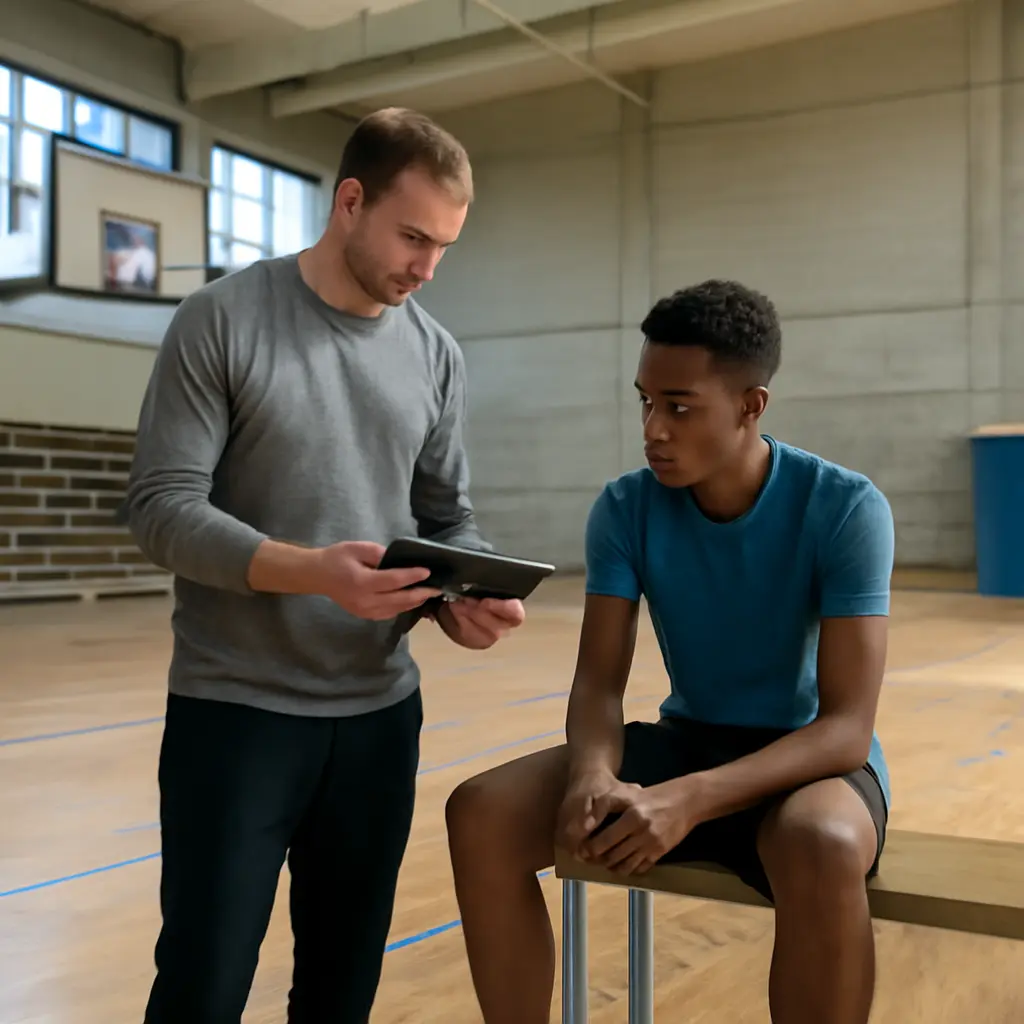
Try: “I care more about how you’re doing than your result. I’ve noticed you seem more tense before practice and less interested afterward. Does that fit how you feel?” Give the athlete time to answer. Avoid dismissals such as “everyone gets nervous,” “you’re overreacting,” or “you’ll feel better after a win.” If the athlete is not ready to talk, let them know you will check in again and remain available.
A real-world example: a season-long change, not one bad game
Imagine a teen who has enjoyed soccer for years but now dreads practice, sleeps poorly, and becomes unusually withdrawn after matches. One disappointing game would not establish a mental health problem. A pattern across weeks, especially alongside reduced enjoyment and disrupted sleep, merits a supportive conversation and assessment of training, school, health, and social pressures. The family might temporarily reduce the load, speak with the coach, and consult a pediatrician—without treating the athlete as weak or deciding in advance that they must quit.
Conclusion: Athlete Mental Health Starts With Listening, Not Judging
Parents can misread athlete mental health by equating performance with well-being, confusing pressure with support, overlooking persistent warning signs, or treating recovery and changing direction as failure. A healthier approach recognizes the whole child, protects rest and choice, and responds to sustained changes with curiosity and qualified care. Ask how sport feels, make support unconditional, and seek professional help when symptoms persist or safety is in question. For further guidance, consult a pediatrician, a licensed mental health professional, and the American Academy of Pediatrics’ youth sports resources.
Sources: American Academy of Pediatrics, “Organized Sports for Children, Preadolescents, and Adolescents,” Pediatrics, 2019, https://publications.aap.org/pediatrics/article/143/6/e20190997/37162/Organized-Sports-for-Children-Preadolescents-and; American Academy of Pediatrics, “Overuse Injuries, Overtraining, and Burnout in Child and Adolescent Athletes,” Pediatrics, 2024, https://publications.aap.org/pediatrics/article/153/2/e2023065129/196465/Overuse-Injuries-Overtraining-and-Burnout-in-Child; International Olympic Committee, “Mental Health in Elite Athletes: International Olympic Committee Consensus Statement,” British Journal of Sports Medicine, 2019, https://bjsm.bmj.com/content/53/11/667; National Institute of Mental Health, “Warning Signs of Mental Illness,” https://www.nimh.nih.gov/health/publications/warning-signs-of-mental-illness; Centers for Disease Control and Prevention, “Youth Risk Behavior Survey Data Summary & Trends Report: 2013–2023,” 2024, https://www.cdc.gov/yrbs/dstr/index.html; World Health Organization, “Burn-out an Occupational Phenomenon: International Classification of Diseases,” https://www.who.int/standards/classifications/frequently-asked-questions/burn-out-an-occupational-phenomenon; National Suicide and Crisis Lifeline, “988 Suicide & Crisis Lifeline,” https://988lifeline.org/; Harwood, C. G., and Knight, C. J., “Parenting in Youth Sport: A Position Paper on Parenting Expertise,” Psychology of Sport and Exercise, 2015, https://doi.org/10.1016/j.psychsport.2015.03.001.
Related Posts

Future Planning Stress Hits Upperclassmen Harder Than Most Realize
Upperclassmen Future-Planning Stress: Why the Transition Beyond College Feels Overwhelming…
How negative comments online impact athlete performance and mental health
Online negative comments can affect athletes’ concentration, confidence, sleep, and…

Teammate Support Scripts Balancing Care With Appropriate Boundaries
Teammate support scripts are prepared phrases and conversation guides that…